When Ignorant Ideologues Take Control Of Major Economic Decisions

  • As previously mentioned, I have been reading Frank Dikötter’s trilogy on the history of China during its years under the rule of Mao Zedong (1949-76). Of the three books, the one covering the middle years of 1958-62 is titled “Mao’s Great Famine.” The name given by Mao and his gang to these years was “The Great Leap Forward.”

  • The story told in this book is the sort of critically important and easily-available information about how the real world works that all our newly-minted elite college graduates have somehow missed. The short version is that a clique of political ideologues with zero knowledge of how things are actually produced takes control of making the major economic decisions. They have what they think are brilliant ideas about how to transform the economy and do everything better. In short order, output collapses and people are starving.

  • It is impossible not to notice the close analogy between the events that led to China’s catastrophe and the ongoing energy disaster being imposed on various U.S. states and other Western countries by an equally ignorant clique of political ideologues.

Read More

ICE Arrest In Far Uptown Manhattan Ends In Shooting: Two Versions Of The Story

ICE Arrest In Far Uptown Manhattan Ends In Shooting:  Two Versions Of The Story
  • On Thursday afternoon, October 8, a guy named Oscar Belgal was shot by ICE agents in the very most northern neighborhood of Manhattan known as Marble Hill. Belgal suffered a non-life-threatening injury to his neck, and received treatment at the uptown campus of the New York Presbyterian Hospital. Here is a picture of Belgal from the New York Post:

  • The shooting immediately set off a round of protests from local activists, calling for abolition of ICE as well as various other of the usual demands.

  • In the two days since the event took place, both the New York Post and the New York Times have provided extensive coverage. The contrast between the coverages of the two papers could not be more dramatic.

Read More

How To Think Like A New York Progressive

  • To judge from many of the comments on this site, a substantial number of readers have difficulty understanding the sophisticated modes of thinking of the New York progressive. Looking at New York’s official progressive orthodoxy in action, these readers often see illogic and inconsistencies that seem to make no sense at all.

  • And yet, despite the apparent internal contradictions, the New York progressives themselves generally achieve near or even complete unanimity as to many of the important policies that they seek to implement. How does this work?

  • We need to take a deeper look. So I thought for today it would be useful to examine some recent policies touted by the progressive crowd, to see what insights we can glean about exactly how they think about the world.

Read More

For Some Reason, New York's Rent Regulations Don't Seem To Be Keeping Rents Low

  • New York City has one of the most expensive housing markets in the country among large cities, and maybe even the most expensive by some measures. By contrast to most other parts of the country, the majority of housing units here are rented rather than owner-occupied.

  • Latest data from Zillow.com gives a city-wide average rent (across all apartment sizes and types) of $3650. In Manhattan, according to this New York Post piece from August 12 (citing data from the Corcoran brokerage firm) the average rent has hit $6,655 per month.

  • According to the politicians in power, the reason for these high rents is that greedy landlords are taking advantage of the tenants. To deal with these greedy landlords, we have had rent regulations in place in various forms since World War II; but after some reforms in the 1990s, by the 2010s those were gradually diminishing in significance. By 2019 a slight majority of the rental apartments, about 1.1 million, were outside the regulation system, with just under 1 million apartments rent-regulated.

  • Then, in 2019, the State Legislature came under full control of the Democrats (after decades of partial Republican control), and the new majorities immediately set out to put the greedy landlords in their place.

Read More

Energy Affordability: An IQ Test For New Yorkers That They Will Very Likely Fail

  • Here in New York, our very-light-weight Governor Kathy Hochul is running for re-election. To her slight credit, she has noticed that New York is a high cost state, not the least for cost of energy, and that New Yorkers are upset about that.

  • New Yorkers are right to be upset about the cost of energy. According to this chart from the federal EIA containing most recent data for July 2026, the average price of electricity to the ultimate consumer in New York for that month was 29.9¢/kWh, compared to a national average of 18.31¢/kWh; and New York’s cost had increased more than 14% from 26.22¢/kWh in July 2025, versus a 4.9% increase in the national average over last year’s 17.45¢/kWh. New Yorkers are also right to be upset because the premium they pay for electricity is mostly to entirely the consequence of intentional government policies that drive up the cost.

  • What’s crazy is that Governor Hochul has decided to make “energy affordability” a theme of her campaign. The reason that is crazy is that at the same time that Hochul claims she favors more “affordability,” she also brags about maintaining and expanding the very policies that have caused the excess costs.

Read More

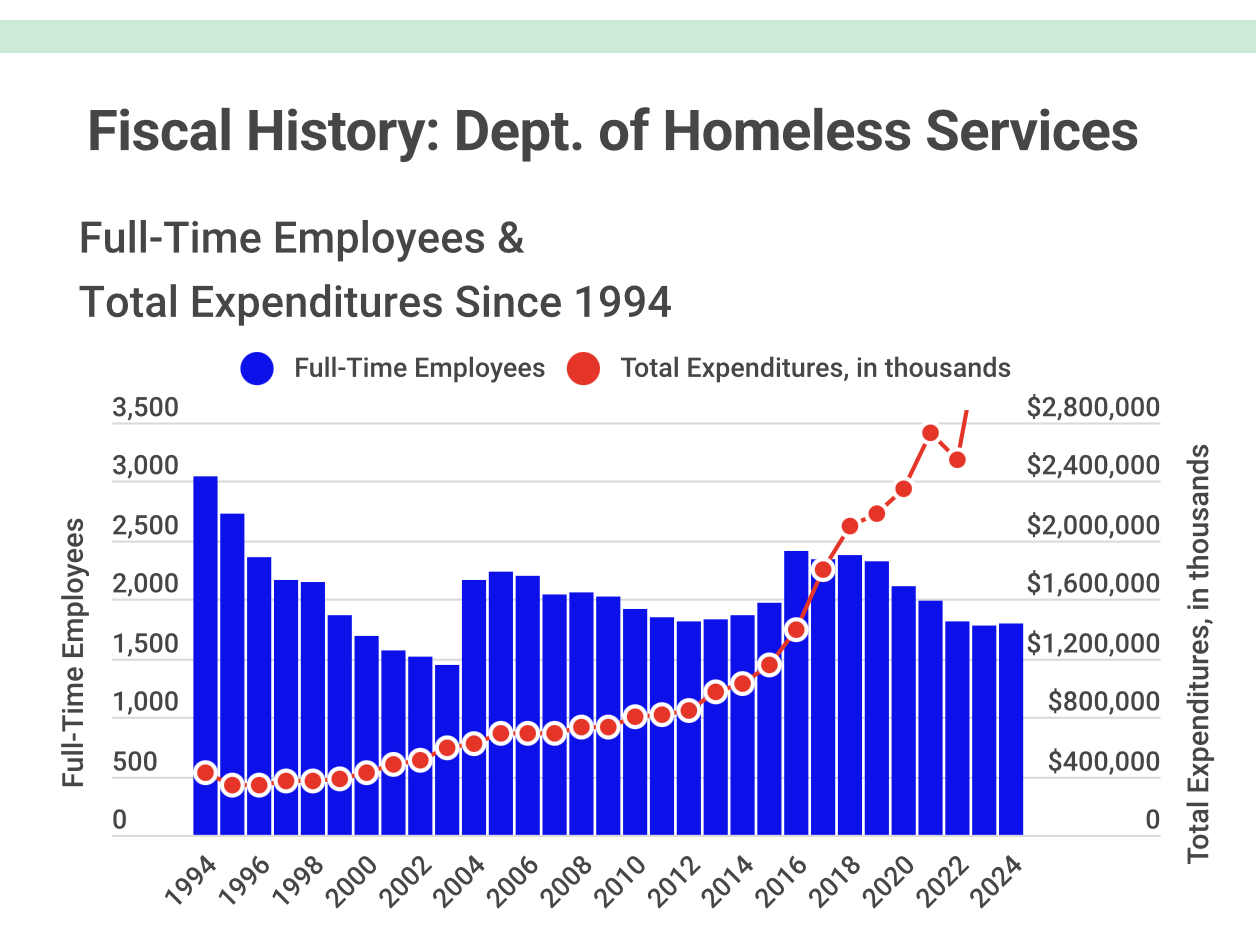
Update On "Homelessness" In New York

Update On "Homelessness" In New York
  • Recently (May 2026) I did an update on the “homelessness” situation in San Francisco. The title was “The Homeless Industrial Complex Eats San Francisco For Lunch.”‍ ‍

  • I have taken a particular interest in “homelessness” in San Francisco ever since that city had a big referendum back in 2018 to pass a special payroll tax supposedly to solve the “homelessness” problem once and for all. The result in San Francisco, you will not be surprised to learn, was that the Homeless Industrial Complex has since swallowed up all the new funding and much more, while the number of people identified as “homeless” has only gone up, and then up some more.

  • But how about New York? In recent years the City hasn’t exactly been bragging about its success in this area, so data have been a little hard to come by. However, a few days ago (September 5) the New York Post had a story that gives an idea of the overall picture.

Read More